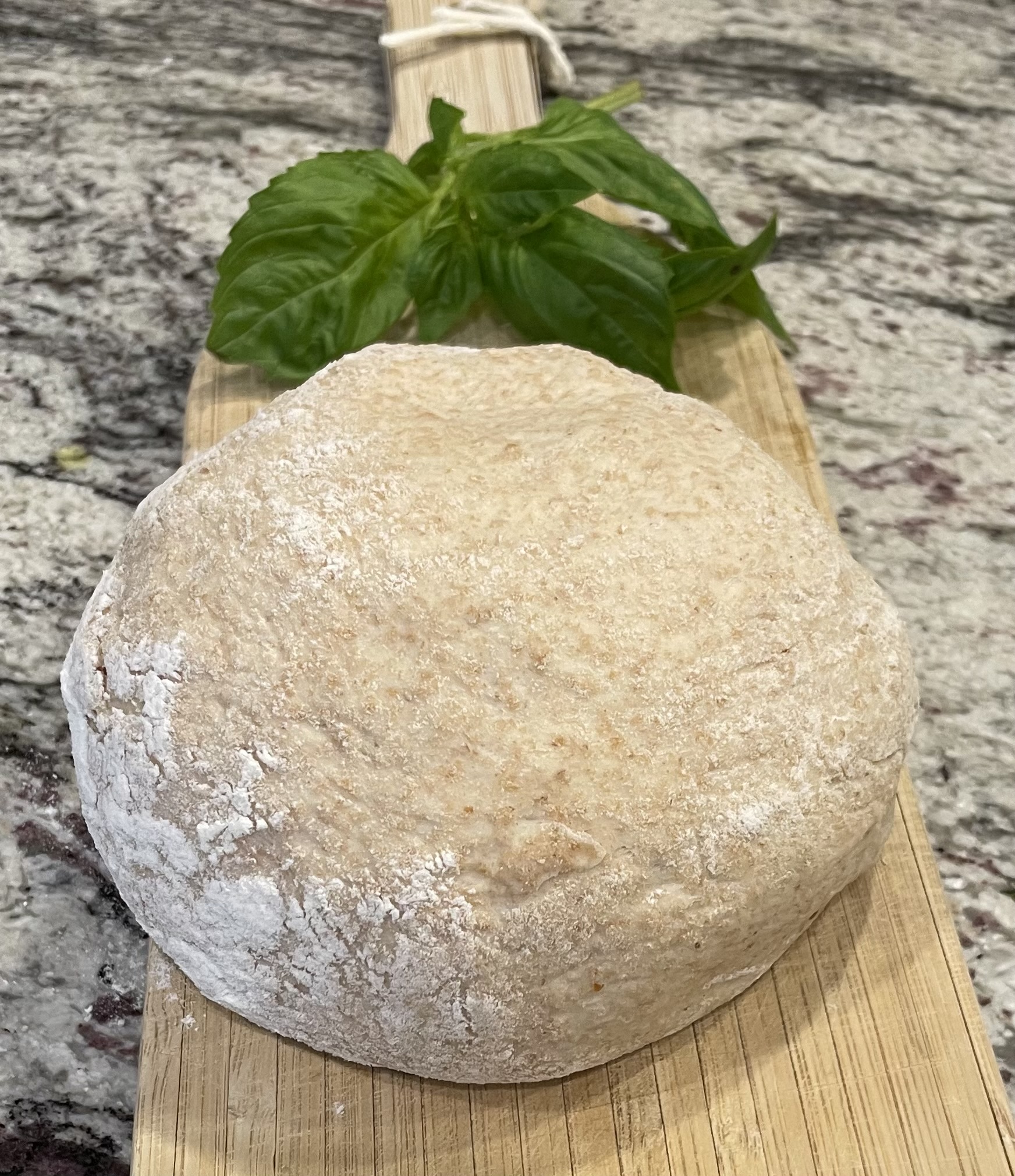
2-Hour Pizza Dough
Servings: 4 servings
Calories:
Make perfect homemade pizza in just 2 hours with this easy, flavorful pizza dough recipe. Using a blend of wheat and white flours, rapid-rise yeast, and a splash of apple cider vinegar, this dough yields two 12-inch or 15-inch pizzas—ideal for serving 2 people each. Soft, chewy, and restaurant-quality results every time.
Print Recipe
Ingredients
- 1½ cups of wheat flour
- 1½ cups of white AP flour
- 1½ teaspoon of vital gluten wheat
- 1 packet instant rapid-rise dry yeast (2½ teaspoons)
- 1 teaspoon agave
- 2 teaspoons fine sea salt
- 1¼ cups warm water
- 2 teaspoons apple cider vinegar
Instructions
Make the Dough
- Make the dough by combining the flour, yeast, salt, and sugar in a large bowl. Stir with a wooden spoon or dough whisk until everything is mixed together.
- Combine warm water (110-115 degrees fahrenheit) and vinegar. Add to dry ingredients and stir with the wooden spoon or dough whisk until a shaggy dough forms and there is only a little bit of dry flour at the bottom of the bowl.
- Knead the dough in the bowl with your hands until all the dry flour is incorporated. Keep folding and pressing it down with the heel of your hand until the dough doesn't stick to your hands and stays together in a smooth-ish ball. This should only take a few minutes.

- Place the dough in a lightly floured large bowl, cover it with a lid or plastic wrap, and let it rise in a warm spot for 45 minutes to 2 hours. (I like to preheat my oven to 200°F for 20 minutes, then turn it off and place the dough inside to rise for about 45 minutes. If using this method, be sure to use an oven-safe bowl.)

- Check your dough after 45 minutes. It should have puffed up and grown by at least 50 percent to fill out the bowl; on a warm day, it will probably have doubled by now, and there will be little bubbles on the bottom. You can ball up the dough and use it now, or you can let it rise for another hour or so to get a slightly airier dough.
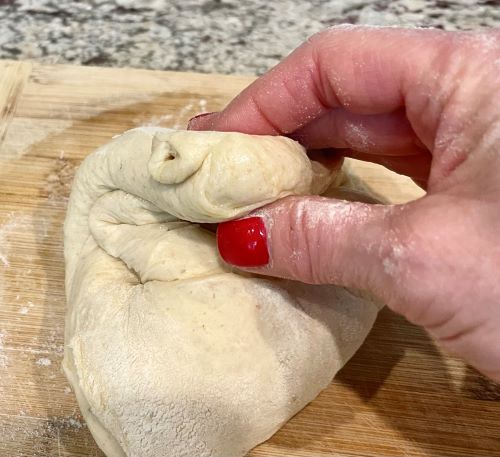
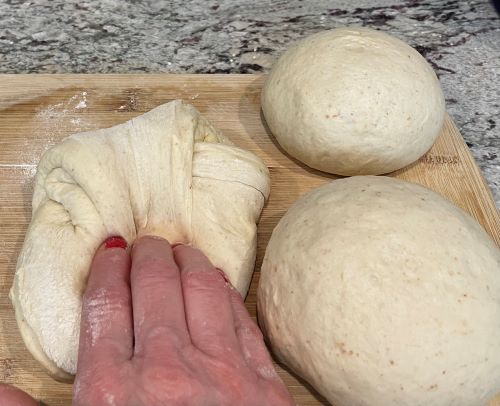
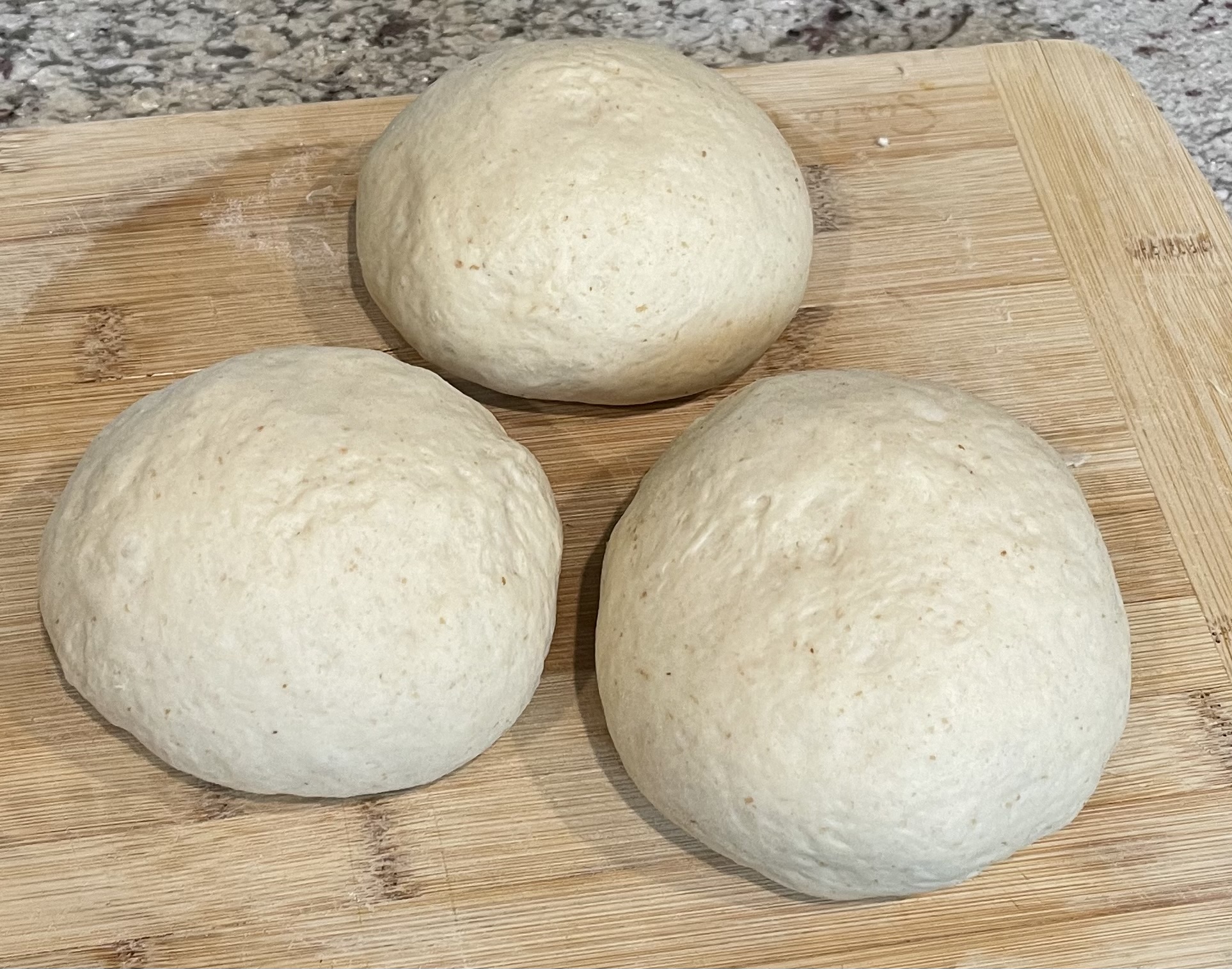
- Lightly flour a work surface, divide the dough in half, and shape each piece into a ball by stretching the edges underneath and grabbing the bottom of the ball with your fist. Cover and let rest for 10–15 minutes, or until the balls puff up a bit. (If you're in a hurry, you can skip this extra resting time and roll out the dough balls right after you form them.)

- To stretch/roll out the dough: Grab one dough ball and place it on a lightly floured surface. Set the other dough ball aside, still under the bowl so it won't dry out.
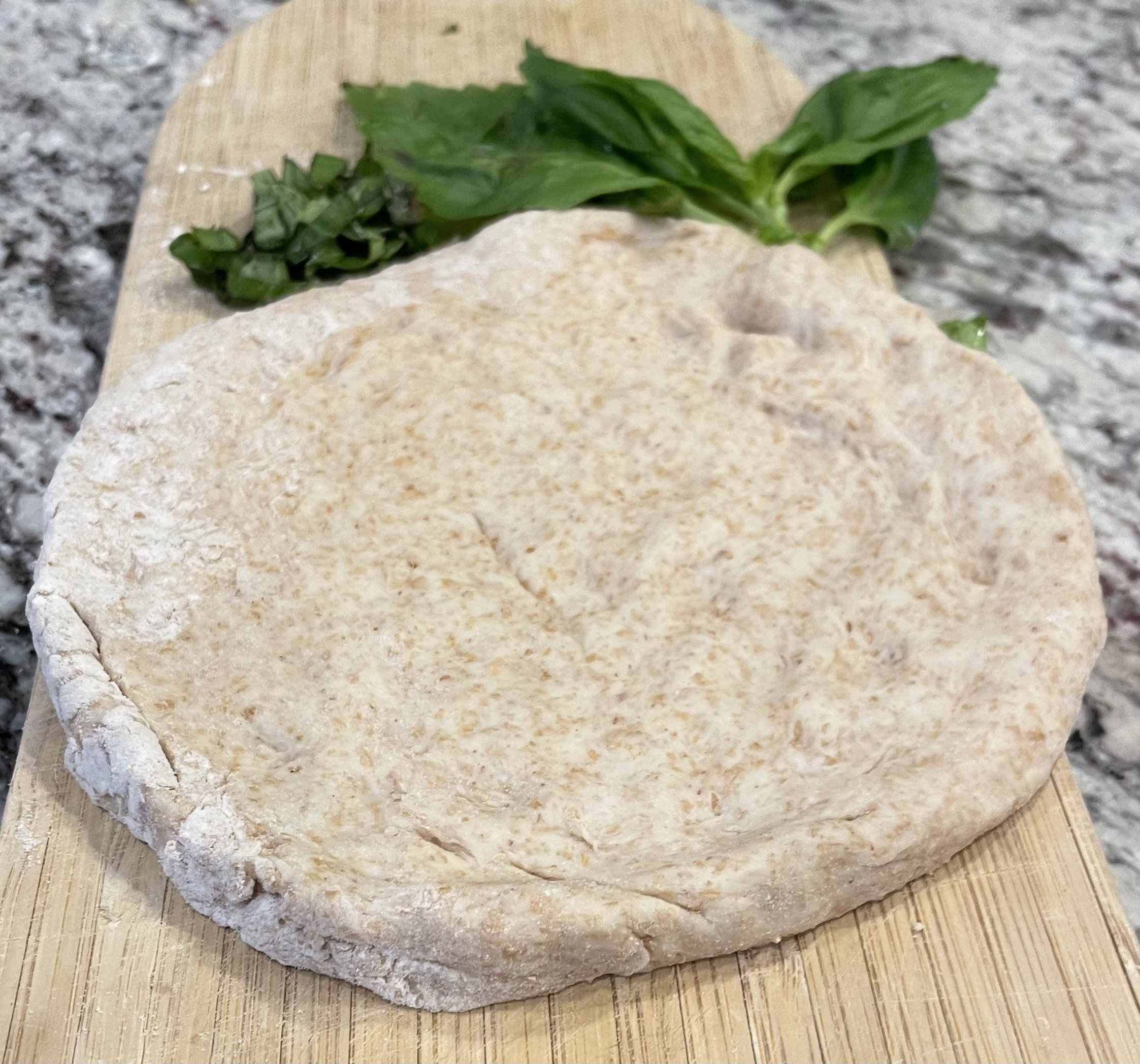
- Flatten the dough slightly with your hand or rolling pin. Gently stretch or roll it into a 12-inch round (or larger up to 15-inches if you like a thin crust), turning and tugging the edges as needed. Keep turning and tugging gently on the edges, letting it hang from your forearm to let gravity do its work, and gently moving your fist underneath from the center to the edges until you have a 12-inch round. If the flattened dough disk barely gives at all when you give it that first tug, you might be better off rolling it out instead. That’s it!

Bake the Pizza
- Preheat your oven to the hottest temperature it will go (450-500 degrees Fahrenheit) with a pizza stone(preferable, see note 3) or sheet pan inside. (If using a sheet pan I have found it best to turn it over).
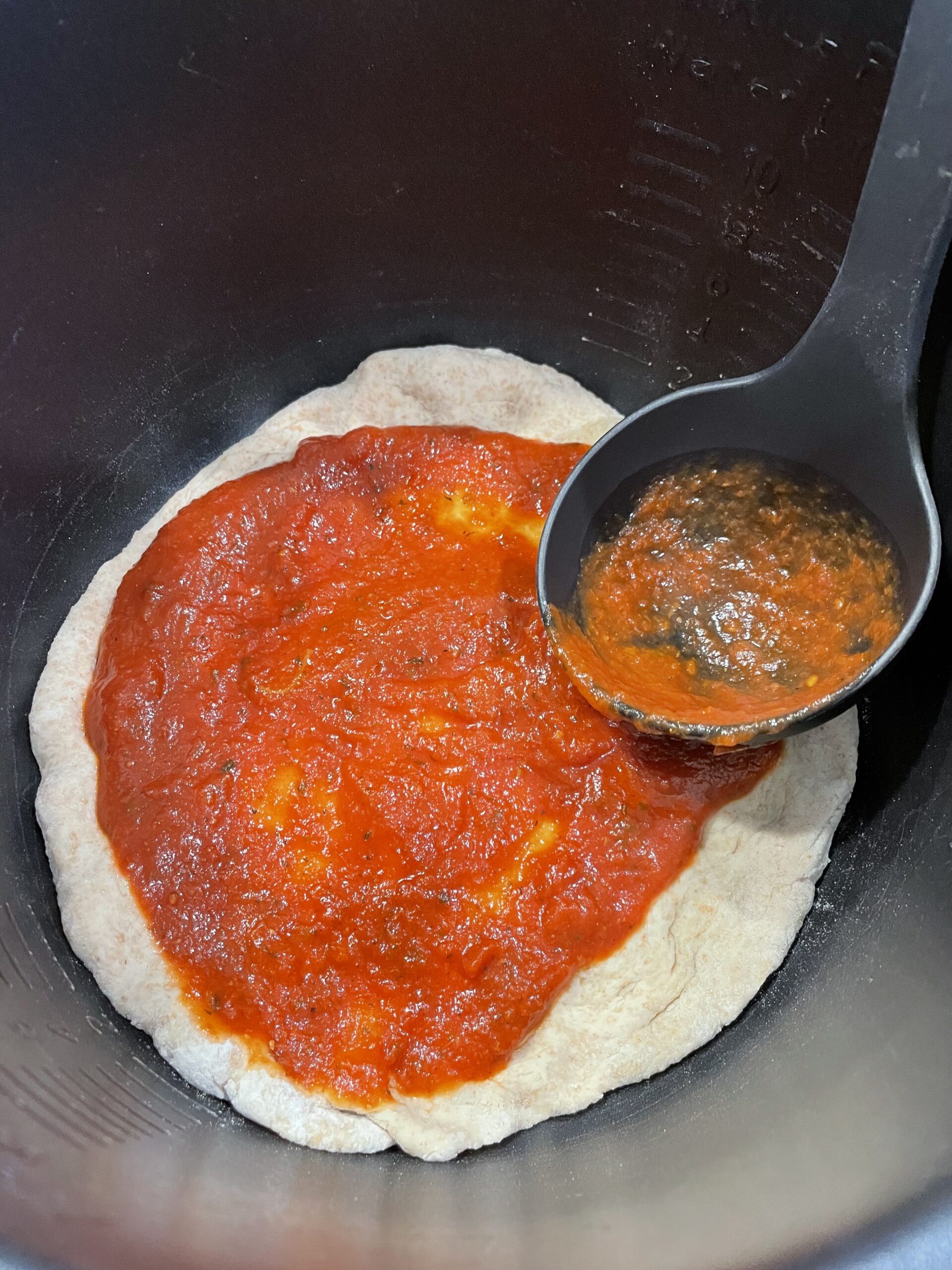
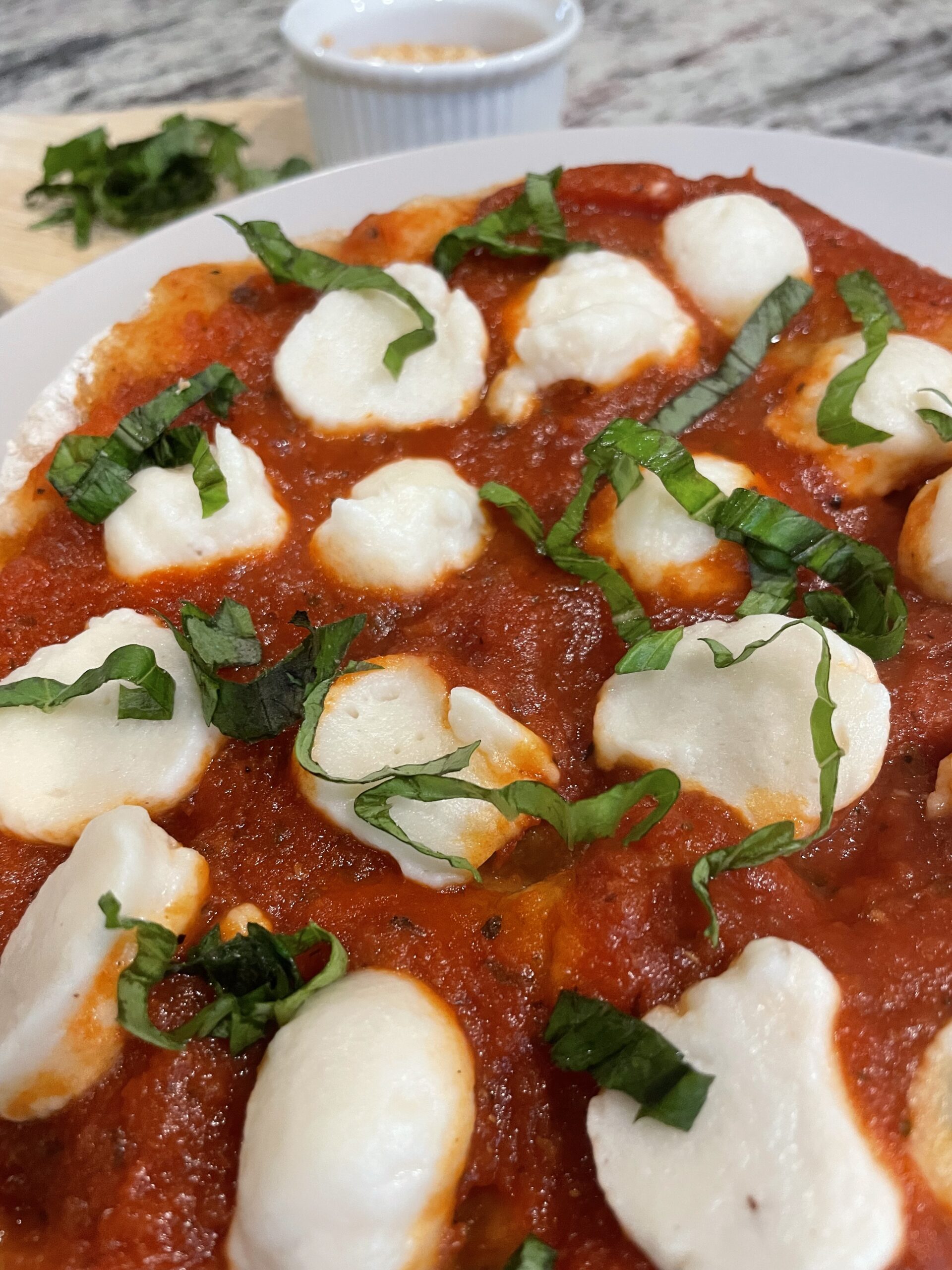
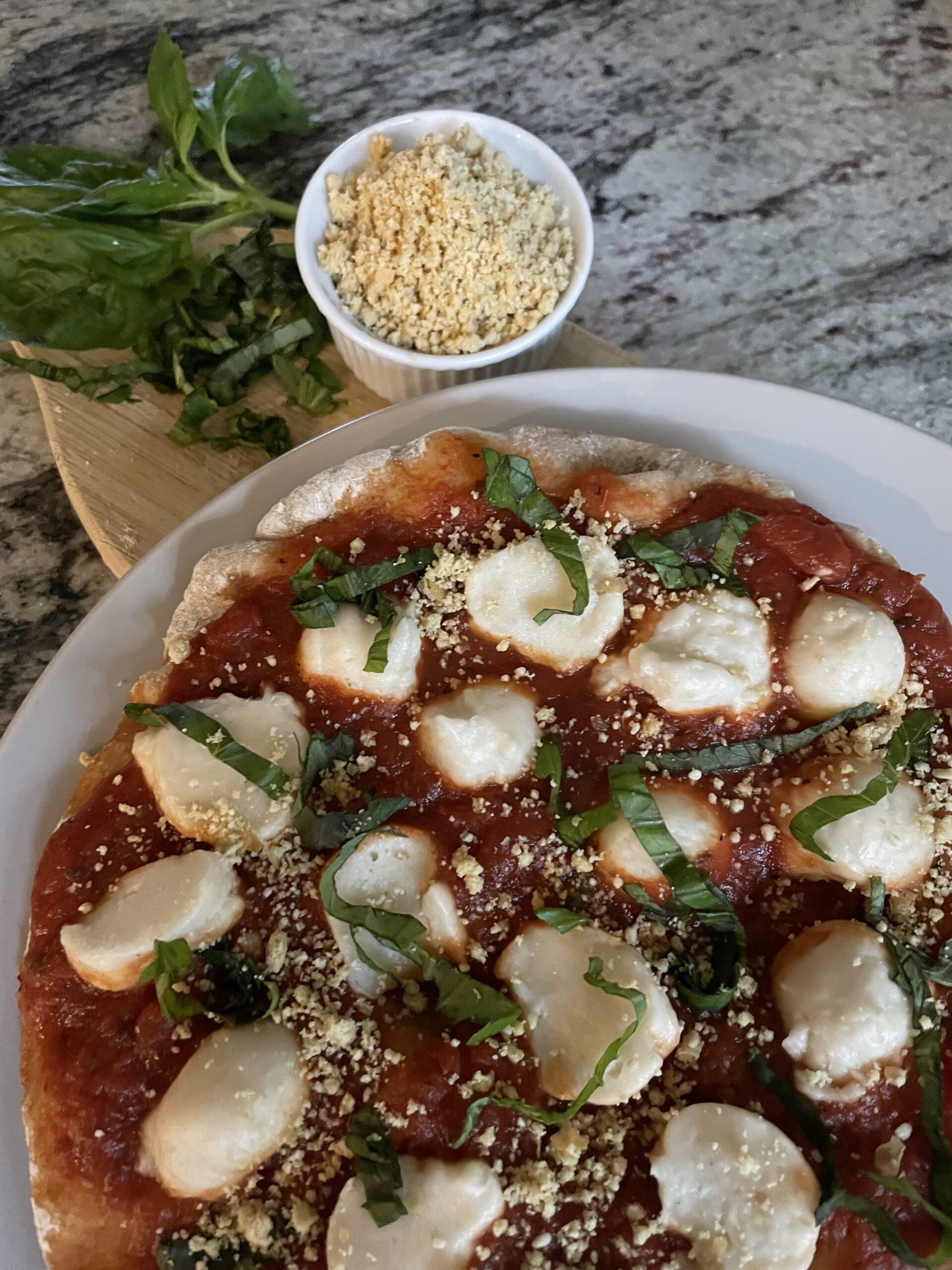
- For easier moving to the hot oven, place your pizza crust round on a piece of parchment and top with your favorite pizza sauce, vegan mozzarella cheese (include links), and vegetable toppings. Maybe add some vegan ricotta and vegan parmesan cheeses (include links). 1 cup tomato pizza sauce -divided2 cups vegan mozzarella -dividedVegetables such as mushrooms, spinach, peppers, onions, etc.

- Transfer the pizza (on the parchment paper) to your hot pizza stone or upside down sheet pan and bake for12-15 minutes or until the crust is golden and the cheese is melted.

- Repeat the stretching or rolling process with the second ball of dough and top and bake that one, too. Or, if you're only making one pizza, you can freeze the second ball in a zip-top bag or refrigerate it in an airtight container for up to 2 days - just make sure you thaw it out and let it come to room temperature before stretching.

Notes
Note 1
3⅓ cups bread flour or all-purpose flour, dipped and leveled (483 grams)
Note 2
Bread flour is a type of wheat flour that has a higher protein content than all-purpose flour—usually 12–14% protein compared to 10–11% in AP flour. The extra protein develops more gluten, which gives dough its elasticity, chewiness, and structure.
Why use bread flour for pizza dough?
- Chewier crust: Gluten development gives pizza that classic chewy texture.
- Better rise: Stronger dough traps gases from yeast more effectively, making a light, airy crust.
- Crispier outside: The combination of chewy interior and crisp exterior comes out better than with lower-protein flour.
