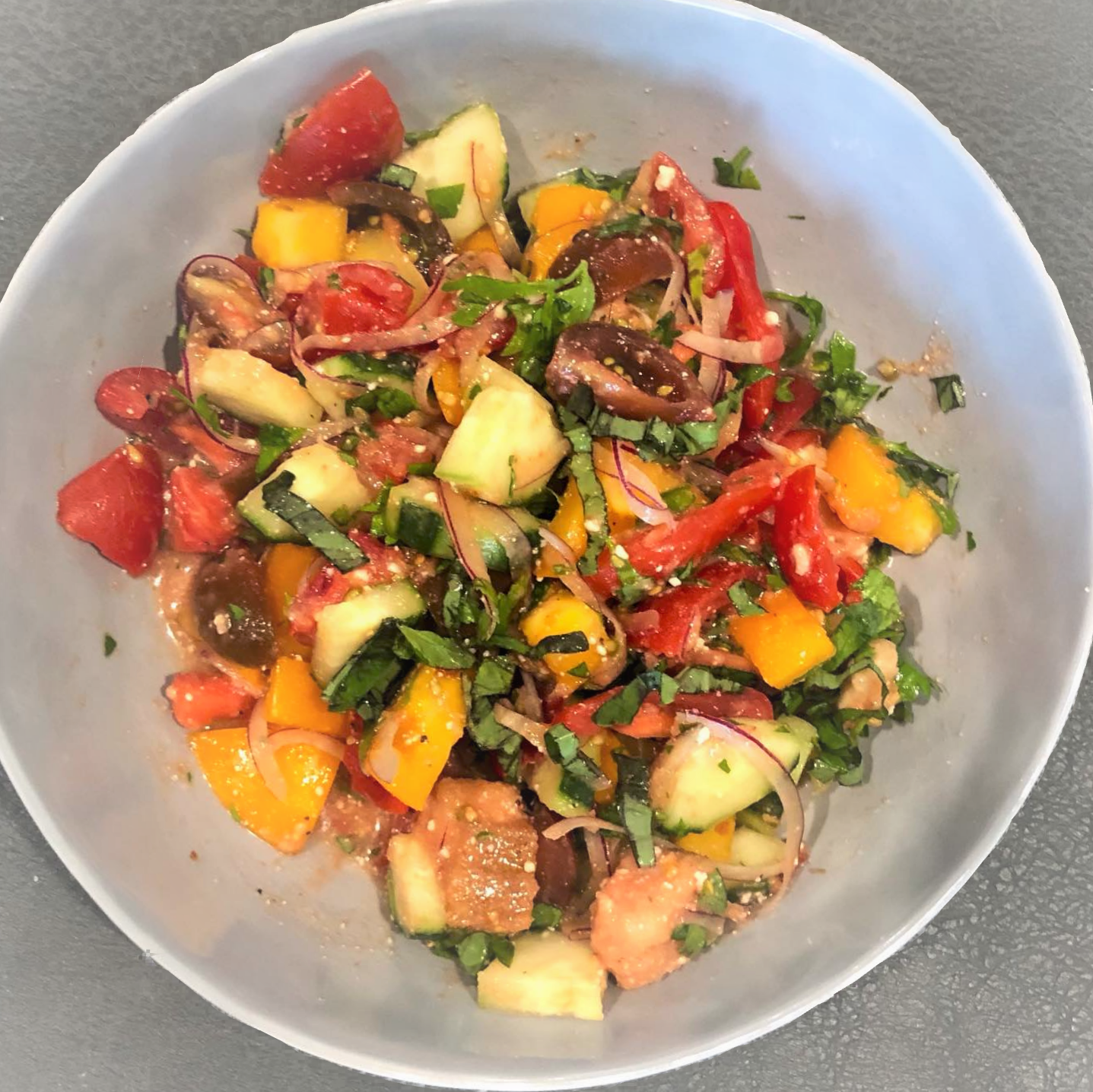
Panzanella Bread Salad
Servings: 2 servings
Calories:
My WFPB version of Panzanella Tuscan Summer Bread Salad uses no oil. Let the bread and veggies linger in the vinegar and fresh herbs so you can fully appreciate the fresh tastes of summer. Replacing a plant-based yogurt provides an expected creaminess that acts as an emulsifier or thickener replacing the heavy and unhealthy oils.
Print Recipe
Equipment
- Chef Knife
- Cutting Board
- Large serving bowl
Ingredients
Salad
- 1½-2 cups 2-3 day stale bread ~ sourdough, whole or ancient grain or ciabatta (if fresh, toast until it dries and hardens)
- 2-3 cups tomatoes - chopped in ½ inch pieces
- 1 cup seedless cucumber a small cucumber, diced in small pieces
- ½ cup onion - a small sweet or red onion finely sliced
- ¼ cup fresh basil leaves chiffonade
- ¼ cup fresh Italian parsley leaves rough chopped
- 4 tablespoon apple cider or red wine vinegar
- 4 tablespoon water
- 3 tablespoon Plain plant based yogurt I use the Culina brand
Gluten Free Ciabatta
- 2 cups gluten free flour I use the Caputo brand
- 1 cup tapioca flour
- 1¼ cups warm water no hotter than 115 degrees F
- 1 tablespoon apple cider vinegar
- 1 tablespoon instant yeast rapid rise is best but traditional is fine
- 1 teaspoon baking powder
- 1 teaspoon salt
- 1 teaspoon agave
Instructions
Salad
- Prepare each component for the Panzanella separately.
The onion
- In a small bowl, soak the sliced onion with 4 Tbsp apple cider vinegar and 4 Tbsp water. Soak for at least 30 minutes. After this time, the onion will lose its pungent flavor and will get softer and sweeter.
The tomatoes
- Dice the tomatoes into ½ inch pieces and place them in a bowl. Season the tomatoes with 2 pinches of salt. This pre-seasoning will drain the juice out that we will add later to the bread.
The cucumber
- In another small bowl, place the diced cucumber and sprinkle with two pinches of salt. Mix well and set aside. The salt will drain the liquid out.
The bread
- If you have time and are gluten free, you can make the Gluten Free Ciabatta recipe included here. Otherwise purchase a good sourdough, whole or ancient grain bread.
- In a colander, wash the dry, diced bread under running water just until softened (about 20 seconds). The duration of this wash depends on how hard your bread is and which type you’re using.
- Bread texture note: If the bread is still hard, add more water, 1 Tablespoon at a time.If it’s too wet, squeeze it very well to remove the excess liquid.The final texture should be softened but still holding its shape. You don’t want to feel the water when you eat the salad. Remember that the bread will also soak up the seasoning (vinegar and tomato juice) we’re adding next. So you can always adjust consistency later.
- Season the bread with 2 Tbsp vinegar, 4 Tbsp water, 1-2 pinches of salt, a sprinkle of black pepper. Set aside.
Assemble the panzanella
- In a colander, drain the cucumber and onion from their liquid. Reserve the liquid.
- Add cucumber and onion to the serving bowl with the bread.
- Mix reserved cucumber/onion liquid with plant based yogurt to make a salad dressing.
- Add tomatoes to the bread.
- In bowl with tomatoes, bread, cucumber and onion, pour salad dressing over.
- Add basil and parsley leaves into the salad.
- Mix together and adjust seasoning with more water, salt and pepper to your taste. You’re now ready to serve.
Make the Gluten Free Ciabatta
- Prepare the Dough:In a large bowl, mix the gluten-free all-purpose flour, tapioca flour, instant yeast, salt, and sugar.In a separate bowl, combine the warm water, and apple cider vinegar.Gradually add the wet ingredients to the dry ingredients, mixing thoroughly until you get a smooth, sticky dough. You can use a stand mixer with a paddle attachment for this step, mixing on medium speed for about 3-4 minutes.
- First Rise: Cover the bowl with plastic wrap or a damp towel and let the dough rise in a warm place for about 1-2 hours, or until it has doubled in size.
- Shaping the Dough: Preheat your oven to 425°F (220°C) and line a baking sheet with parchment paper.
- Turn the dough out onto a well-floured surface. The dough will be sticky, so dust your hands and the surface with gluten-free flour to handle it more easily.Gently shape the dough into a rectangular or oval loaf, roughly resembling the traditional ciabatta shape. Transfer the shaped dough to the prepared baking sheet.
- Second Rise: Let the dough rise again for about 30-45 minutes, covered with a damp towel, until it has puffed up slightly
- Baking: Bake the bread in the preheated oven for 20-25 minutes, or until the crust is golden brown and the loaf sounds hollow when tapped on the bottom.Allow the ciabatta to cool completely on a wire rack before slicing.Tips:For extra flavor, you can add herbs like rosemary or thyme to the dough.To achieve a crispier crust, you can place a pan of hot water on the bottom rack of the oven while baking to create steam.Store any leftovers in an airtight container at room temperature for up to two days or freeze for longer storage.
Notes
Panzanella is not a dish to prepare hours in advance. The bread will get too soggy. You can prepare all the different ingredients beforehand and assemble the panzanella no more than 30 minutes before serving.
About the bread
- The classic panzanella is rigorously made with a 2-3 day stale Tuscan bread, which has a very unique consistency when soaked and squeezed. Its crumb remains grainy, having almost the texture of a couscous. It’s hard to get the same texture with another quality of bread. Usually, you’ll end up with something like porridge, which is not a great texture for this salad.
- It’s important to use stale bread, the drier the better. The amount of water the bread will absorb should be just enough to get rehydrated, without ending up too mushy. Toasting the stale bread helps dry it out and makes a better texture, in case there’s some moisture left.
- I have made this with cornbread and ciabatta croutons which are both wonderful. Cut your bread into 1 inch cubes and bake at 300 degrees for 10-15 minutes. Remove from oven and turn/toss and bake for another 10 minutes or until completed dried and crunchy.
- If using fresh bread, toast it in the oven until dry and hard.
- The original panzanella, of which we have recordings from the 1500s in poems and paintings, didn’t make use of tomatoes. Tomatoes arrived in the Old World just after the Italian explorer Christopher Columbus officially set foot in the Americas. He came back to Western Europe with some tomato plants that were grown in gardens just for their beauty. Only later do tomatoes find their way to the kitchen, becoming a staple for many recipes. Lucky for us!
- You can use different types of tomatoes, according to your taste. It’s nice to mix different varieties and colors, to have different textures.
- There’s no limit to what you can add to Panzanella to make your own summer salad. In Livorno they add anchovies, in Florence celery and thyme, in Viareggio tuna, pickles, boiled eggs, capers, rucola, raw or roasted bell peppers and so on. Just find your inspiration.
- Regarding cheeses, none is required but if you want, vegan feta or mozzarella would great.
