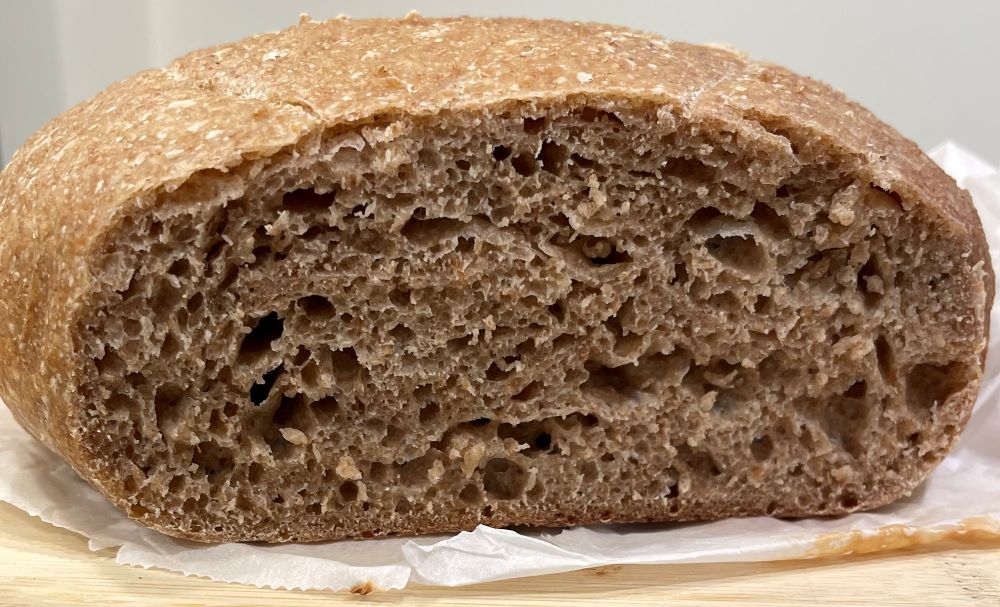
Whole Grain Sourdough Artisan Bread in Dutch Oven
Servings: 12 servings
Calories: 179kcal
Whole grain flours are hailed for their toasty, earthy flavors. Packed with plenty of fiber and nutrients, their natural complexity is a perfect match for slow-fermented sourdough. Swapping white flour for whole wheat flour and expecting the same results isn't realistic. With a few minor adjustments, you can make amazing whole wheat sourdough bread that’s not only light and delicious,, but good for you too. It is worth the time and you'll find yourself making it once or twice a week! Don't forget to weigh your ingredients for this recipe to yield the best results.
Print Recipe
Equipment
- Kitchen Scale
- Medium Bowl
- Dutch Oven
Ingredients
- 100-150 g bubbly active sourdough starter
- 350-375 g warm water 80–85 F* If you use 100g of starter, use 350g water. The dough should be sticky and very wet.
- 300 g whole wheat flour
- 175 g white unbleached flour
- 30 g sweetener of choice 1 tbsp ~ This is optional but it helps feed the starter during the resting steps.
- 25 g chickpea flour Using a bit of chickpea or other grain flour with unbleached AP is a substitute for Bread Flour.
- 10 g fine sea salt 1 tsp
- 2 tbsp water Used the next day when baking the bread.
Instructions
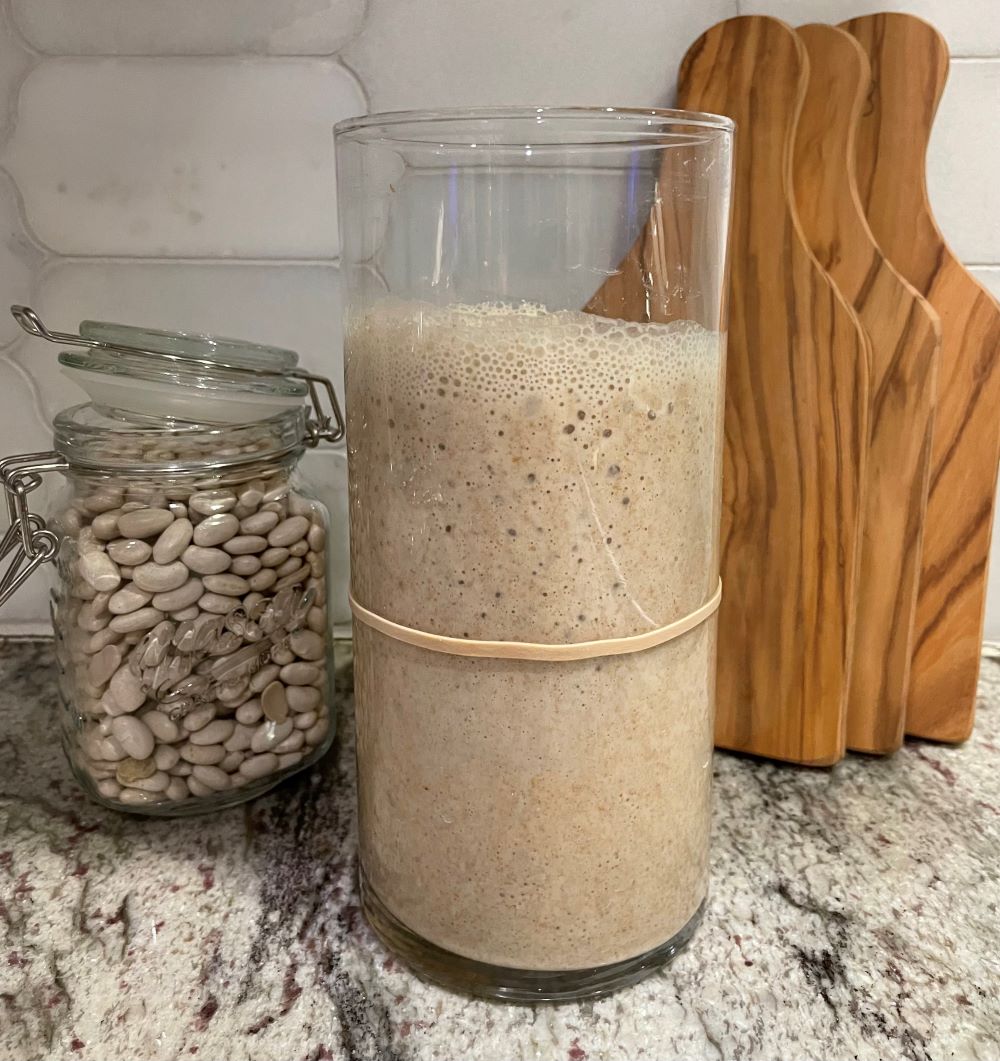
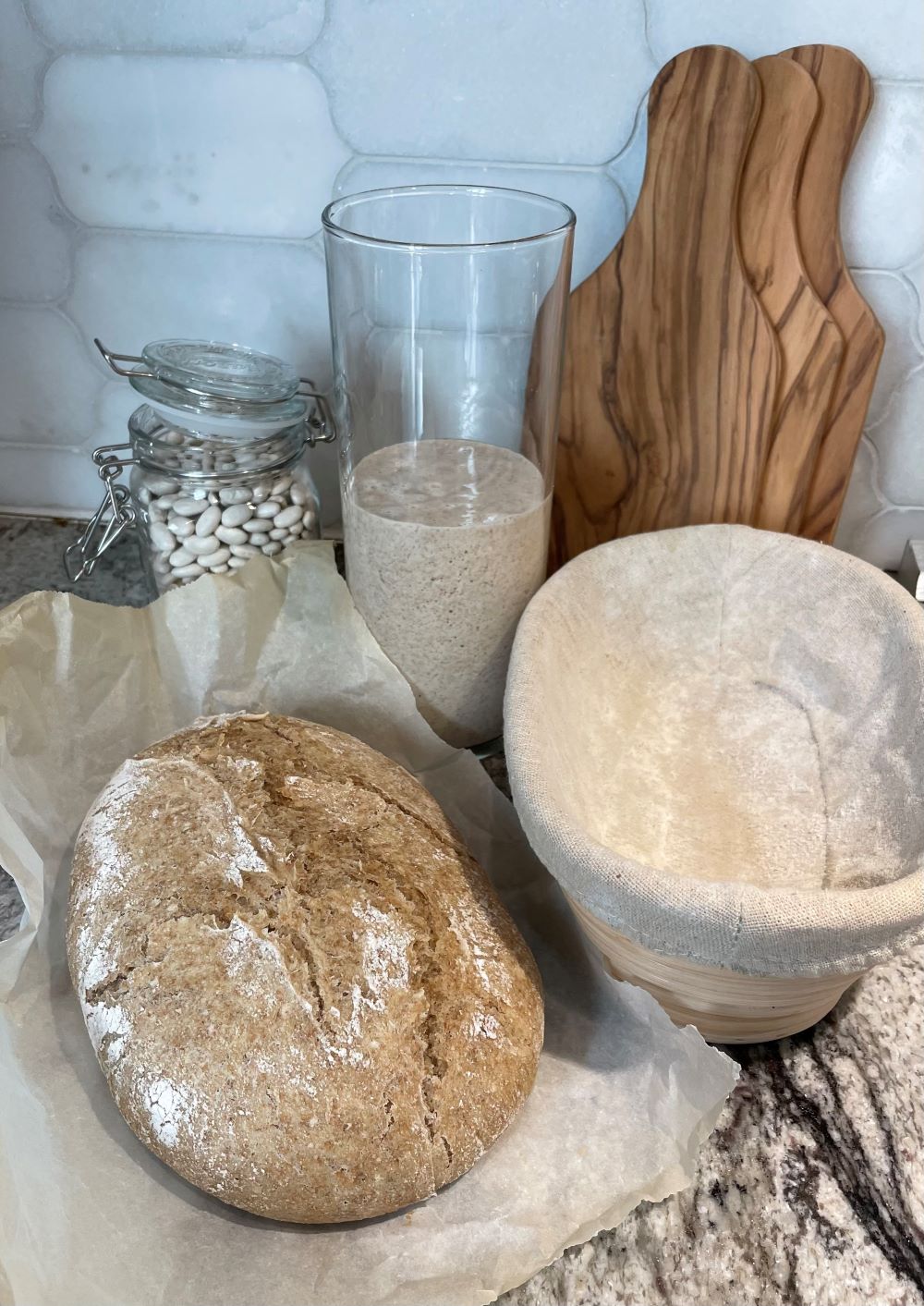
- Once the old starter has been thoroughly reactivated, it will reach peak activity (rise to at least double in size) faster and more vigorously than when it first came out of the fridge. Once your starter reaches peak activity, it's ready to bake with.

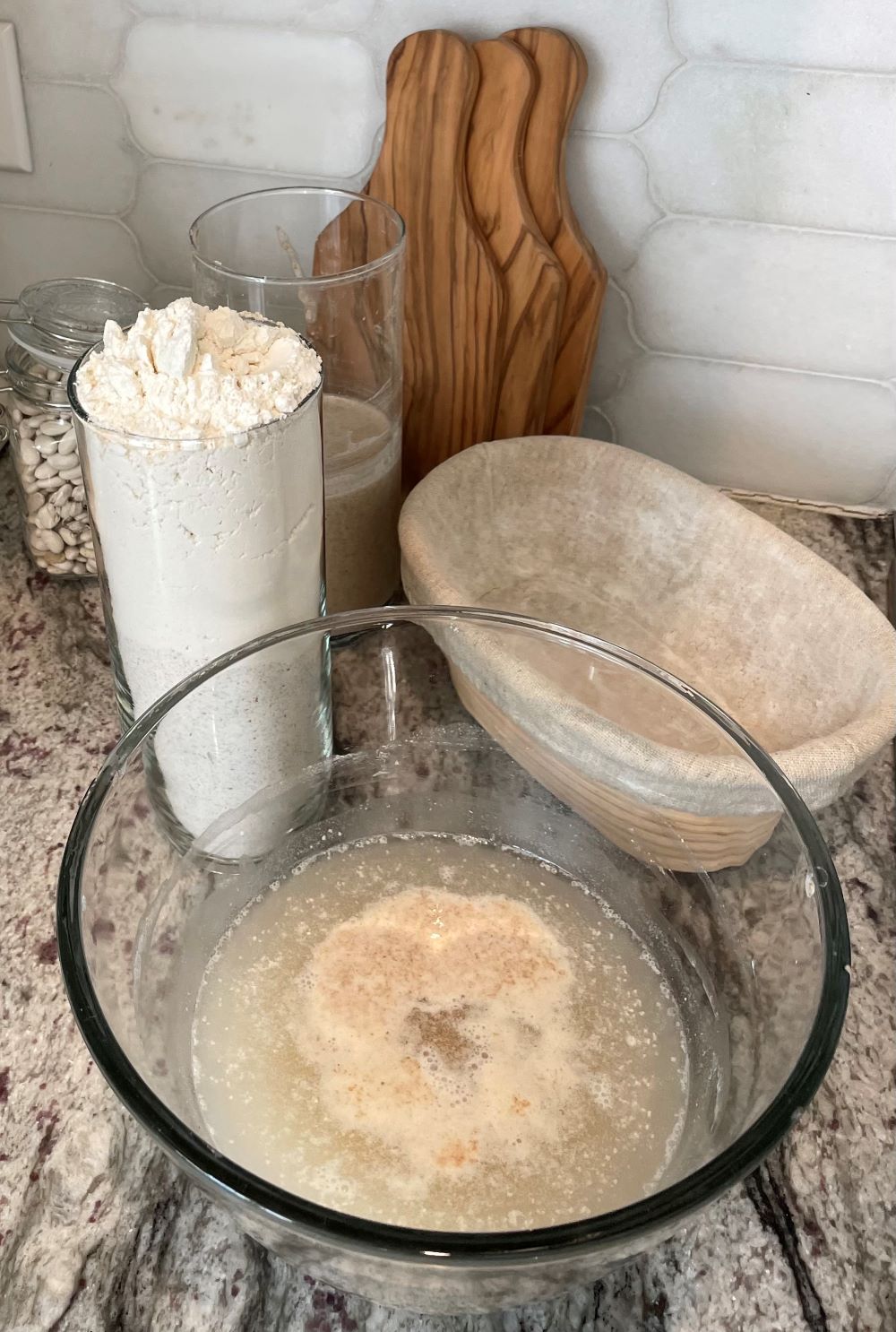
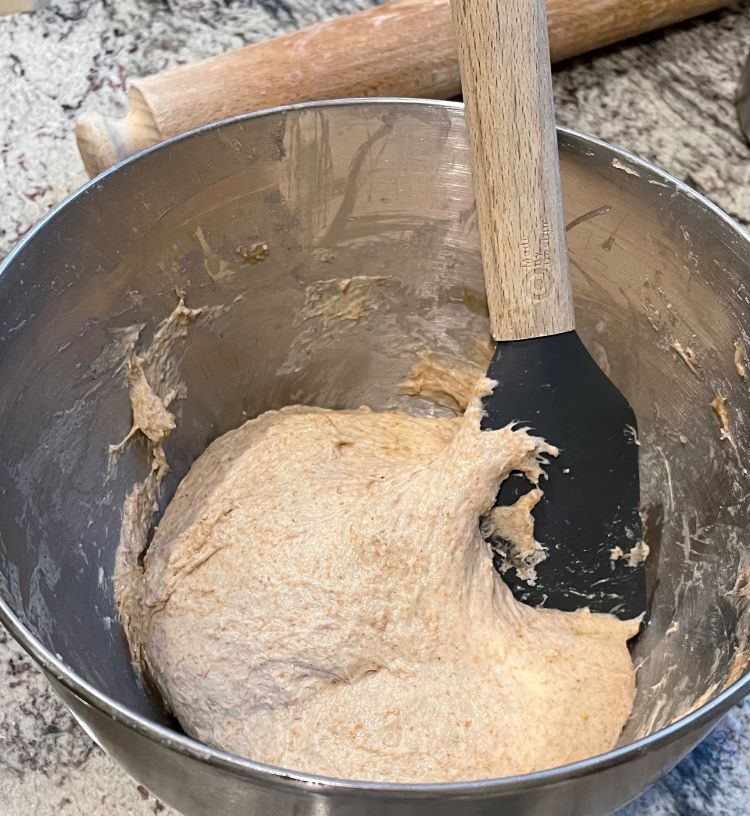
- Combine the sourdough starter and water in a large bowl. Add the flour and salt. Mix with a fork and then finish by hand to fully incorporate the flour. It will feel very wet and sticky. Cover with a damp towel or wrap and let rest for 1 hour on your countertop or place in the oven with the light on.

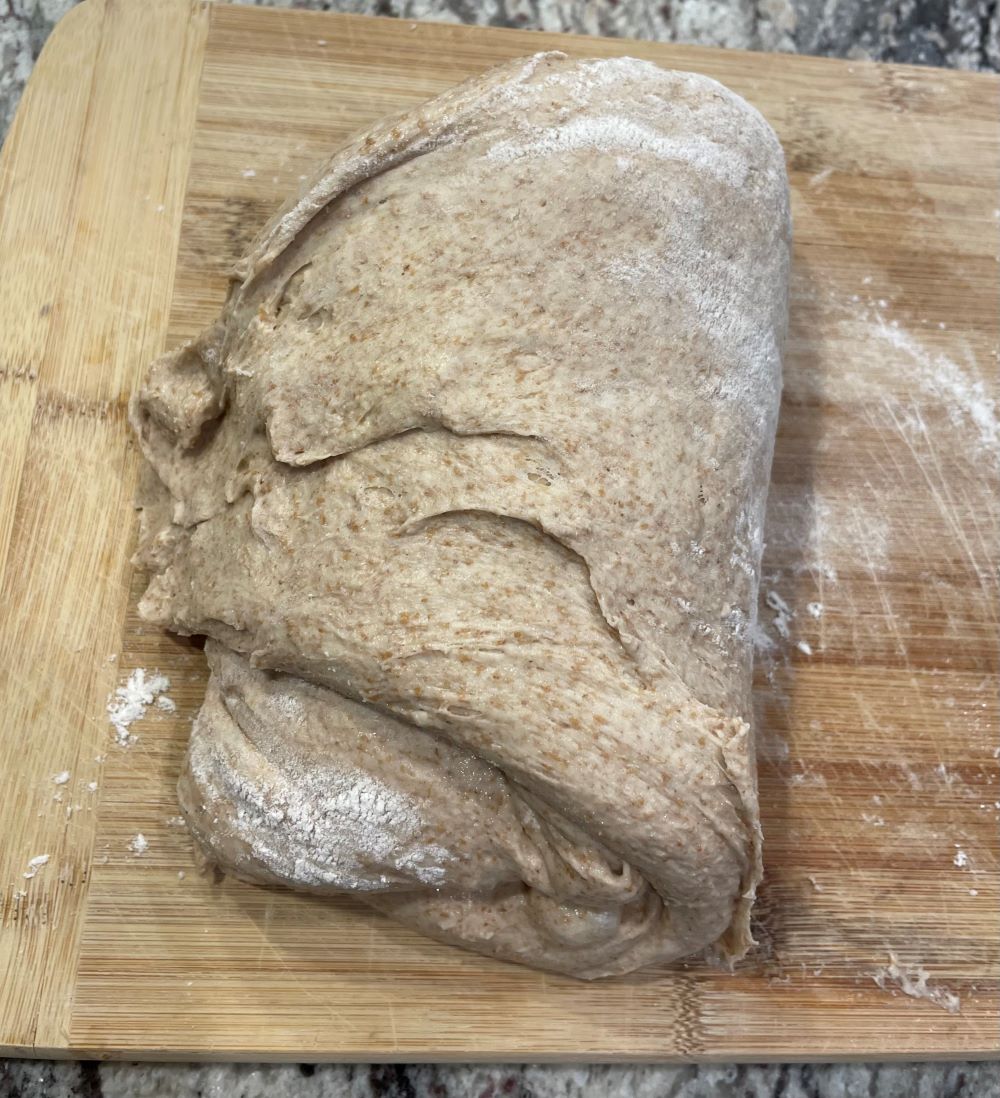
- Use my PLANTifull Fare Sourdough Baking Schedule Calculator to plan your schedule as follows: Mix the dough and let it rest for 1 hour. Stretch it 4 times over 2 hours, let rise for 2-3 hours, cover and chill overnight, then next morning bake it.After the dough has rested for 1 hour, it is time for the first fold. You can keep the dough in a bowl or move to a baord.Wet your hands. This is important becaaude others=wise you'll have a sticky gooey mess on your hands.Gather a portion of the dough, stretch it upward, and fold it over into the center of the bowl. Turn the bowl 1/4 and repeat 3 more times, stretching and folding the dough to come full circle around the bowl (for 1 set of 4 folds). If the dough still feels slack after the 1st set, do an additional set to tighten the dough.

- For best results, do 4 sets total spaced 30 minutes apart resting the covered dough in a warm spot in between each set. The dough will tighten after the 4th set.When finished with the folds, cover the bowl and continue the rise at for about 2-3 hours. The dough is ready when it has almost doubled in size. Wrap and chill the bowl overnight; the dough will continue to rise only slightly in the fridge

- In the morning, make sure the dough has doubled in size. If not, give it more time to bulk up, if needed. This is super important to build strength.Line a small bowl (or proofing basket) with a cotton or linen cloth. Sprinkle with flour. You’re going to shape the dough twice to build extra strength.

- After the dough has rested, flip it over again (the smooth side should be facing down now). Shape it again following the steps above. Flip it back over. With floured hands, gently cup the dough and pull it toward you in a circular motion to tighten its shape. Place the dough into the lined bowl or proofing basket seam side up. Cover with the cloth overhang.
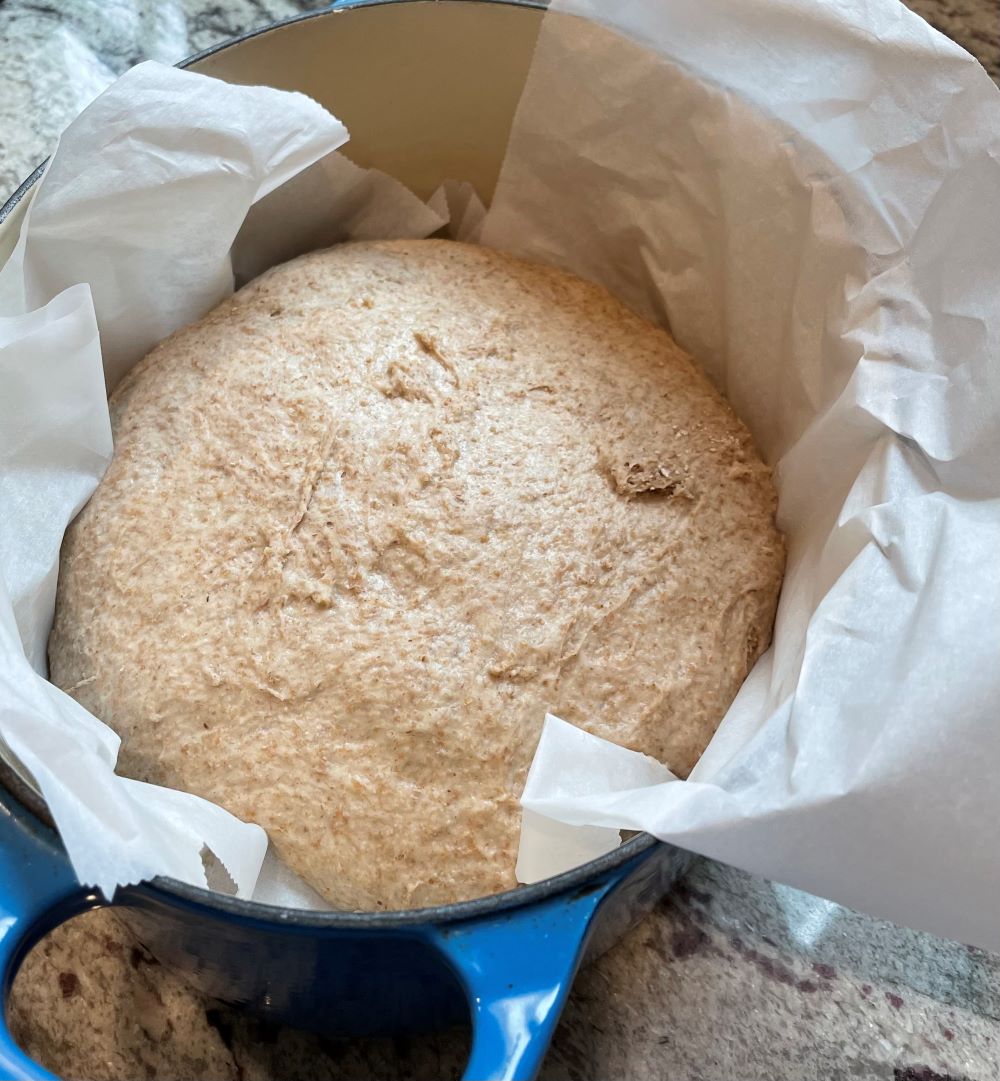
- Rest in the warm spot you used earlier for 30 minutes to 1 hour. The dough is ready when it looks puffy and has risen slightly, but has not yet doubled in size. The dough should not be very cold prior to baking.Preheat your oven to 450F towards the tail end of the second rise.Cut a sheet of non-stick parchment paper to fit the size of your baking pot, leaving enough excess around the sides to remove the bread.
- Place the parchment over the dough and invert the bowl to release. Sprinkle the dough with flour and gently rub the surface with your hands. Using the tip of a bread lame, small, serrated knife or a razor blade, make four shallow 4-inch long cuts at 3, 6, 9, and 12 o’clock around the dough. Use the parchment paper to transfer the dough to a Dutch oven (or another oven safe pot with lid).

- Bake the dough on the center rack for 20 minutes, covered. Remove the lid, and continue to bake for 40 minutes and golden brown.When finished, transfer to a wire rack. Cool for 1 hour before slicing, for best texture.

Notes
TIP: Whole wheat doughs tend to rise faster than white doughs, especially in warm weather. To avoid over-proofed dough, try make this recipe when you know you will be home to incorporate the stretch and fold technique. The dough is shaped and baked the following morning.
- 7:00 AM: Mix the dough/Rest for 1 hour
- 8:00 AM: 1st Stretch and Fold
- 8:30 AM: 2nd Stretch and Fold
- 9:00 AM: 3rd Stretch and Fold
- 9:30 AM: 4th Stretch and Fold
- 10:00 AM: Bulk rise for 2-3 hrs @ 75- 78 F
- 7:00 or 8:00 PM: Cover and chill the bowl overnight
- 6:00-8:00 AM (the following morning): Shape & Bake the dough
- Avocado Toast: Toast a slice of sourdough bread and top it with mashed avocado, a sprinkle of salt and pepper, and perhaps a drizzle of olive oil.
- Grilled Sandwich: Make a gourmet grilled cheese sandwich using sourdough bread. Add your favorite veggies and perhaps some caramelized onions.
- Sourdough Panzanella Salad: Cube sourdough bread and toast it until golden brown. Toss the cubes with tomatoes, cucumbers, red onion, and a vinaigrette dressing for a tasty panzanella salad.
- Sourdough Croutons: Cube sourdough bread, toss the cubes with olive oil, salt, and your favorite herbs, then bake until crispy. Use them to top soups or salads.
- Sourdough Stuffing: Cube and toast sourdough bread to use in your favorite stuffing recipe for Thanksgiving or other special occasions.
- Sourdough Bread Pizzas: Cut sourdough into individual-sized pieces, toast, and use them as a base for mini pizzas. Everyone can customize their own toppings.
- Sourdough Bread Soup: Slice sourdough bread, toast it lightly, and use it as a unique vessel for your favorite ice cream.
Nutrition
Calories: 179kcal
